The cart raises eyebrows
At almost every wedding, someone asks about the cart.
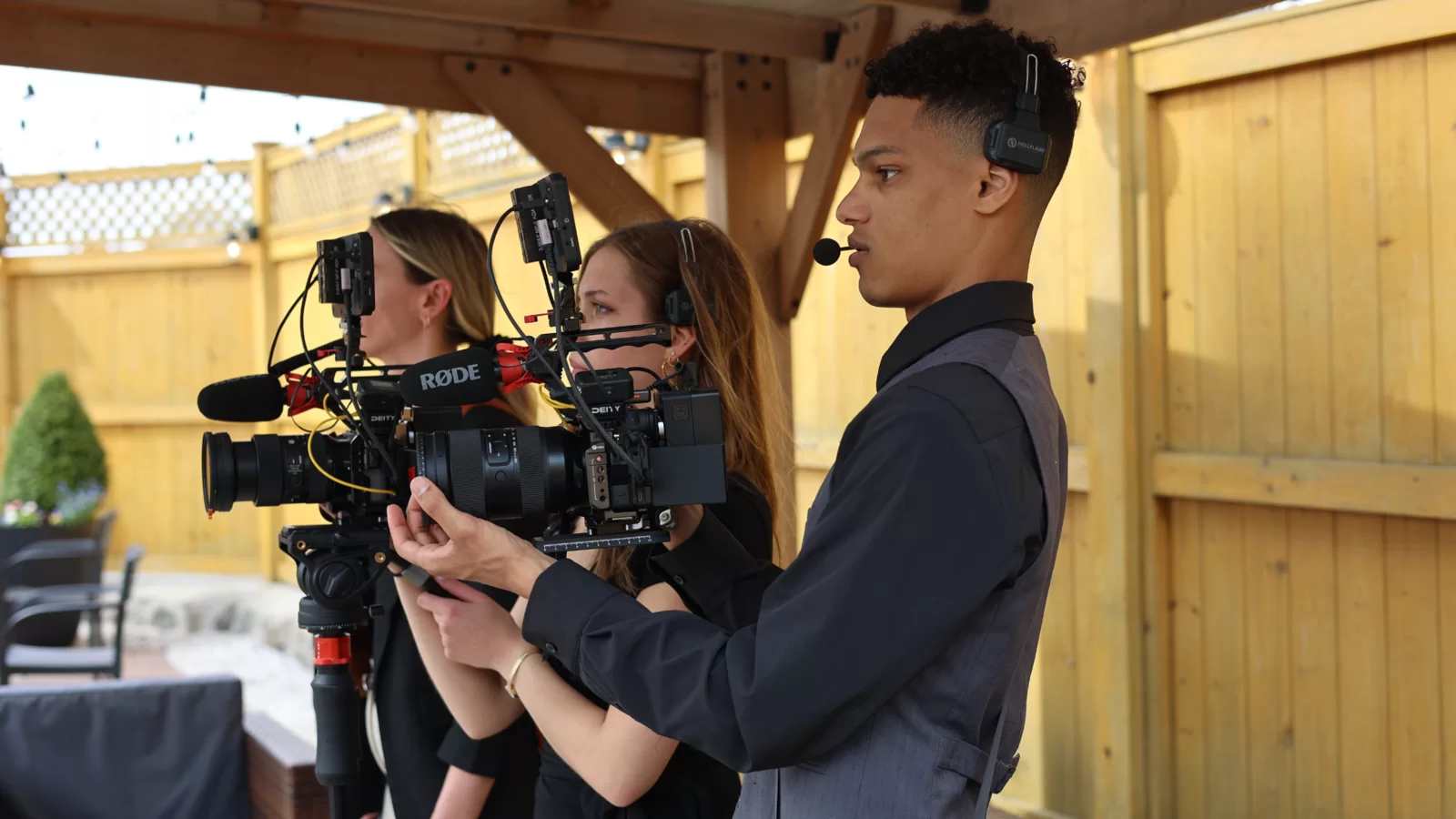
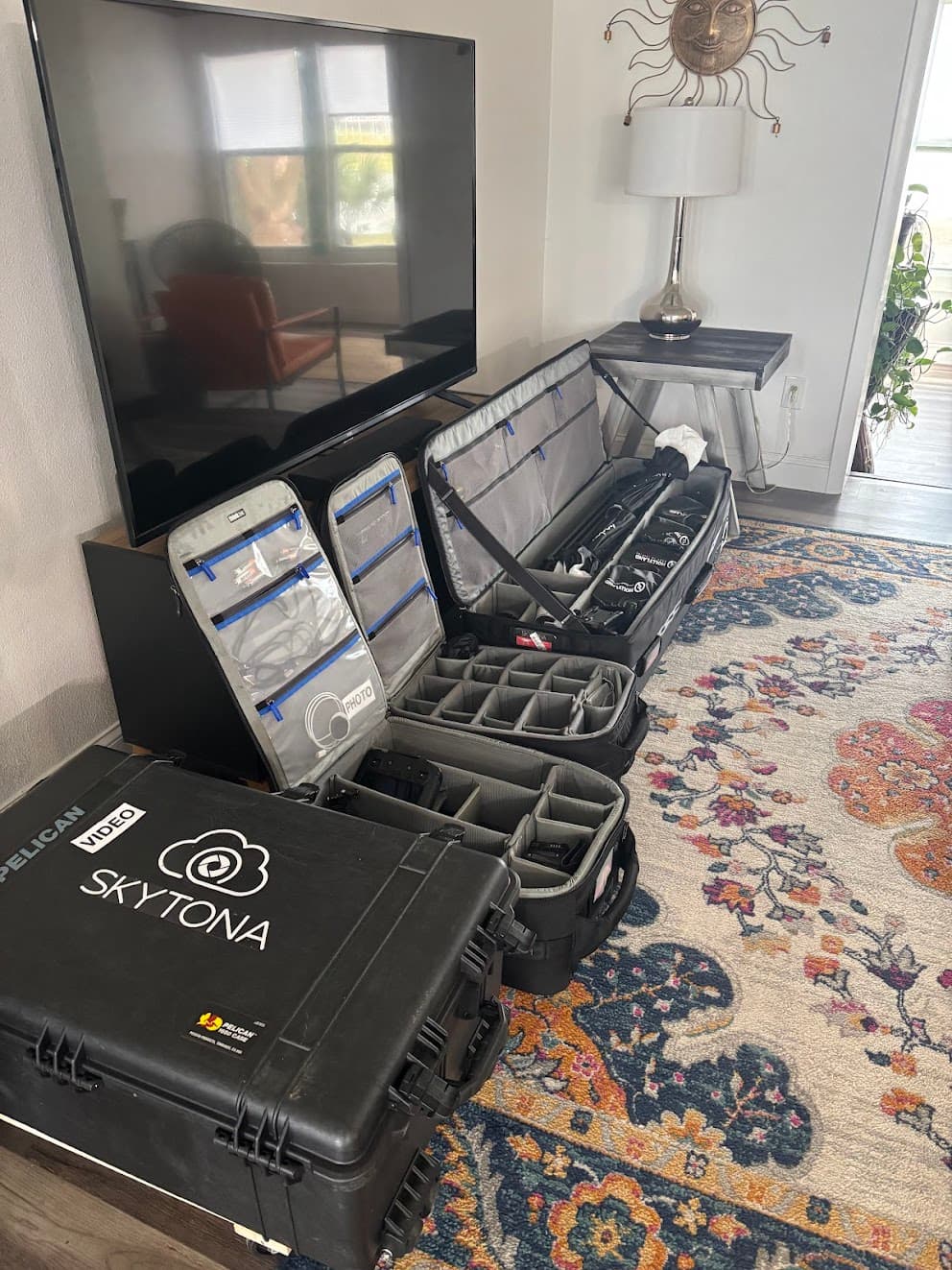
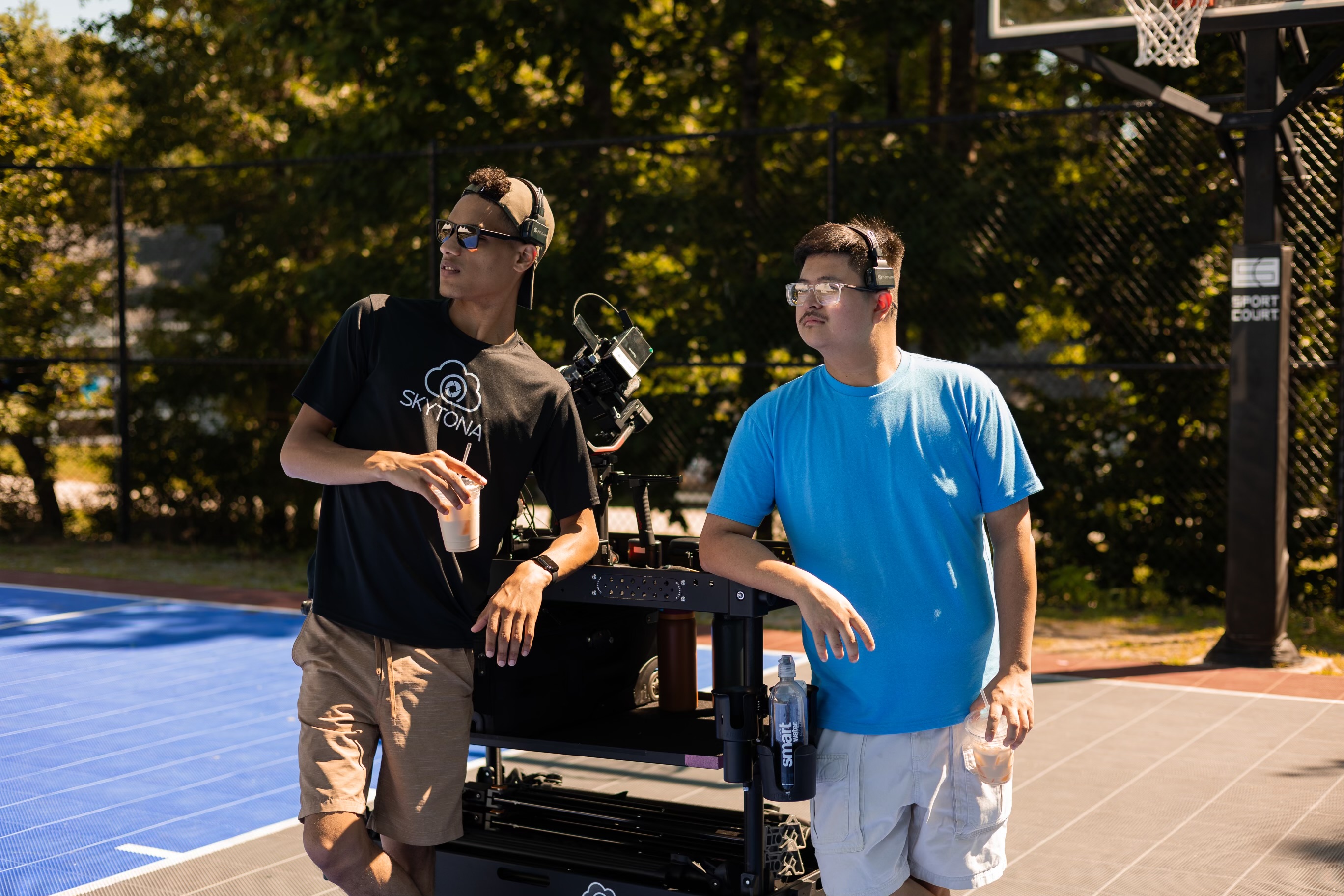
We roll in with a professional production cart, the kind you would expect on a commercial set, loaded with cameras, lenses, recorders, monitors, and light. That is not something you see every day at a wedding, and it is wildly different from what most of the industry brings. Guests notice. Vendors notice. And inside the curiosity there is usually a fair question: does a wedding really need all of that?
A wedding video does not. A wedding film does.
Every piece earns its place
Here is the part people do not expect. By the end of the night, every single piece of equipment on that cart has been taken off, used, and put back. Nothing rides along for show. The kit is exactly as large as the job, and no larger, because we design the loadout to be purposeful: if it does not help us capture the story, it stays at the studio.
We also own every piece of it. No rental agencies, no borrowed gear arriving the morning of. Owning and maintaining our equipment in-house means we know every switch and every quirk cold, it is serviced to our standard, and the same proven kit shows up ready at every production.
A film is built from angles
The deeper reason for the volume is simple: intentional filmmaking needs perspectives.
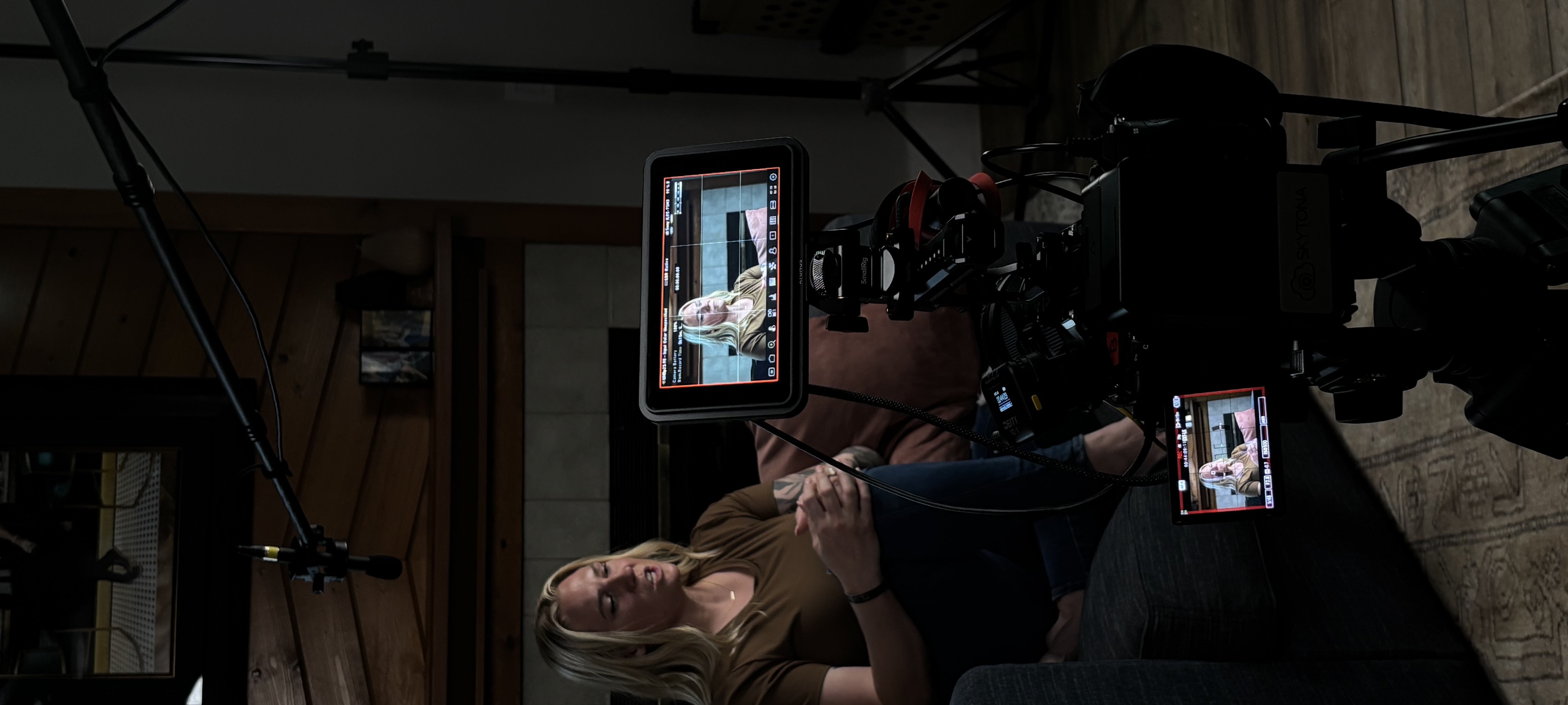
A ceremony is not one shot. It is the wide frame that holds the room, the long lens finding faces, the detail of two hands during the vows. Toasts land differently in the film when you can cut from the speaker to the couple laughing to a table erupting. For the edit to move like that, those moments have to exist in the footage, which means multiple cameras and multiple microphones recording independently, at the same time, all day.
That is what redundancy actually means for us. It is not a pile of backups waiting for disaster. It is the workflow itself: every key moment covered from more than one angle and more than one audio source, so the film can cut seamlessly between perspectives. And if any single device ever has a bad day, the moment still exists several times over.
What guests actually notice
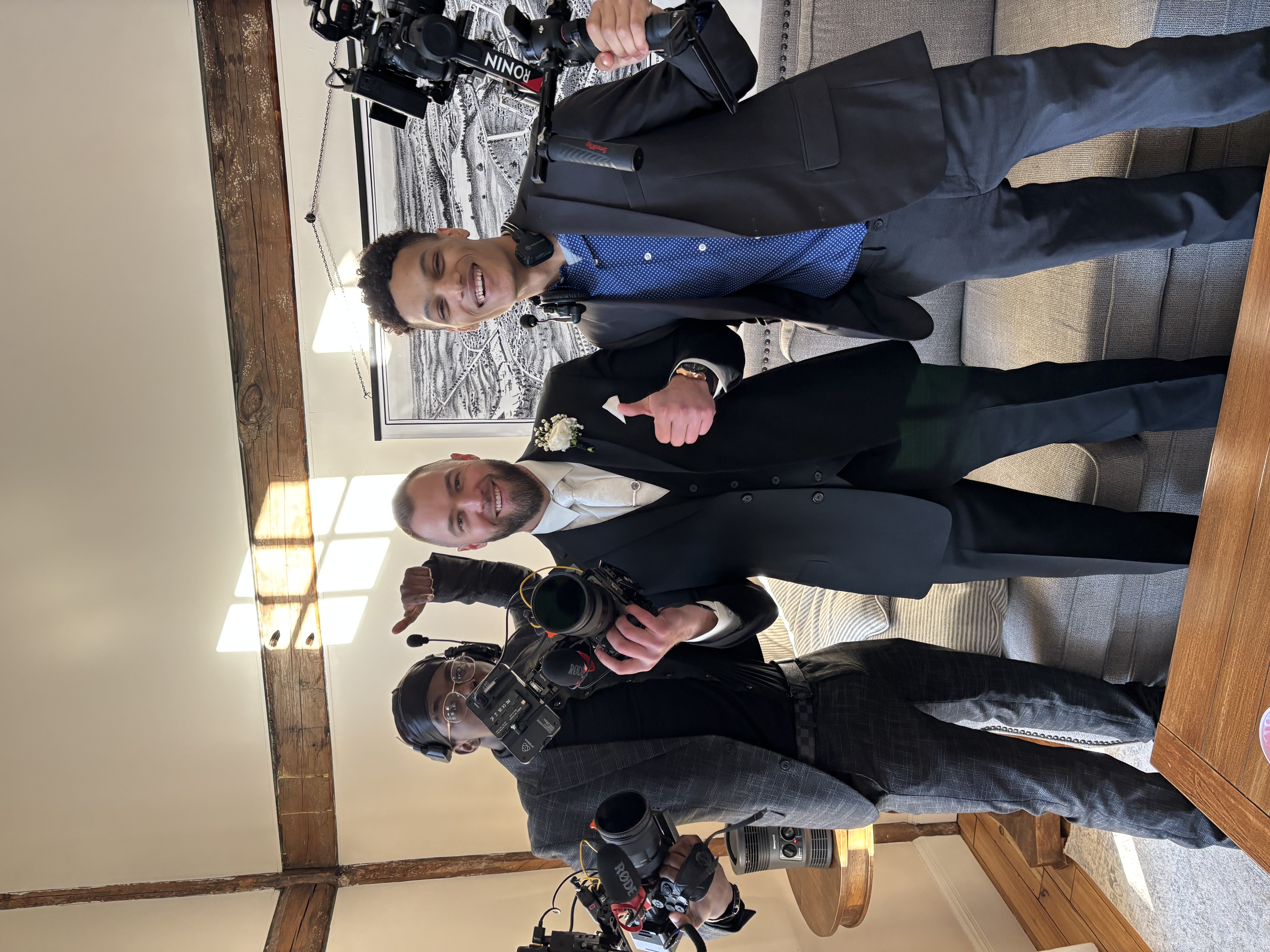
Guests tell us the same two things at almost every wedding. First, that they spotted a camera everywhere something was happening. Second, that they noticed the crew itself: coordinated, communicating over headsets, moving with intention instead of scrambling. Filmmakers on a headset system is not a sight most people associate with weddings.
We take that as the compliment it is. It signals what is true: an advanced team was hired to capture the day. And because the crew communicates silently and stays choreographed, the day simply goes on around us while nothing gets missed.
Tools that earn the trip
A few of the workhorses, and the jobs they exist to do. Compact full-frame cinema cameras, like the Sony A7S III and FX3, deliver a theater-grade image from candlelit receptions without flooding the room with light stands. Stabilized rigs like the DJI RS 4 Pro carry the story when it moves. Field recorders like the Tascam FR-AV2 capture 32-bit float audio with so much headroom that a whispered vow and a ballroom cheer survive in the same take. And when a New England coastline deserves scale, the drone goes up for a few deliberate shots.
Different tools, one test: each piece exists to craft visuals that basic gear could not easily replicate.
The part you cannot buy
The honest truth is that gear is the smaller half of the equation. What makes it all work seamlessly together is expertise and workflow: knowing where each camera should stand, how the audio chain gets re-verified before vows and toasts, how eight hours of coverage becomes a film that moves like cinema.
New filmmaking techniques and new tools come out constantly, and we are always researching innovative ways to capture and tell a story. The bar behind all of it does not change: nobody should ever watch our work and think it was basic. Every frame and every shot must be intentional.
Where it all ends up
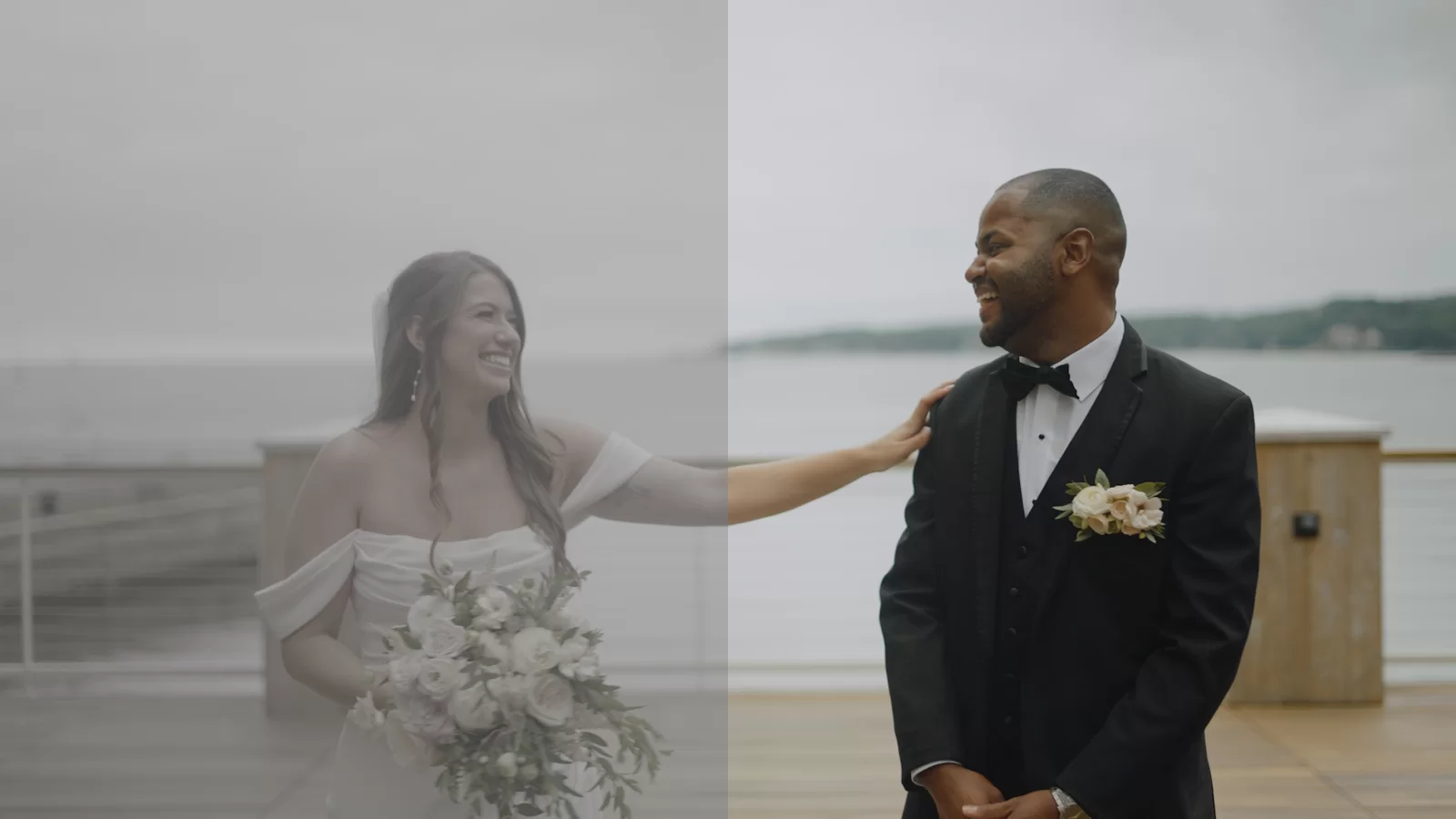
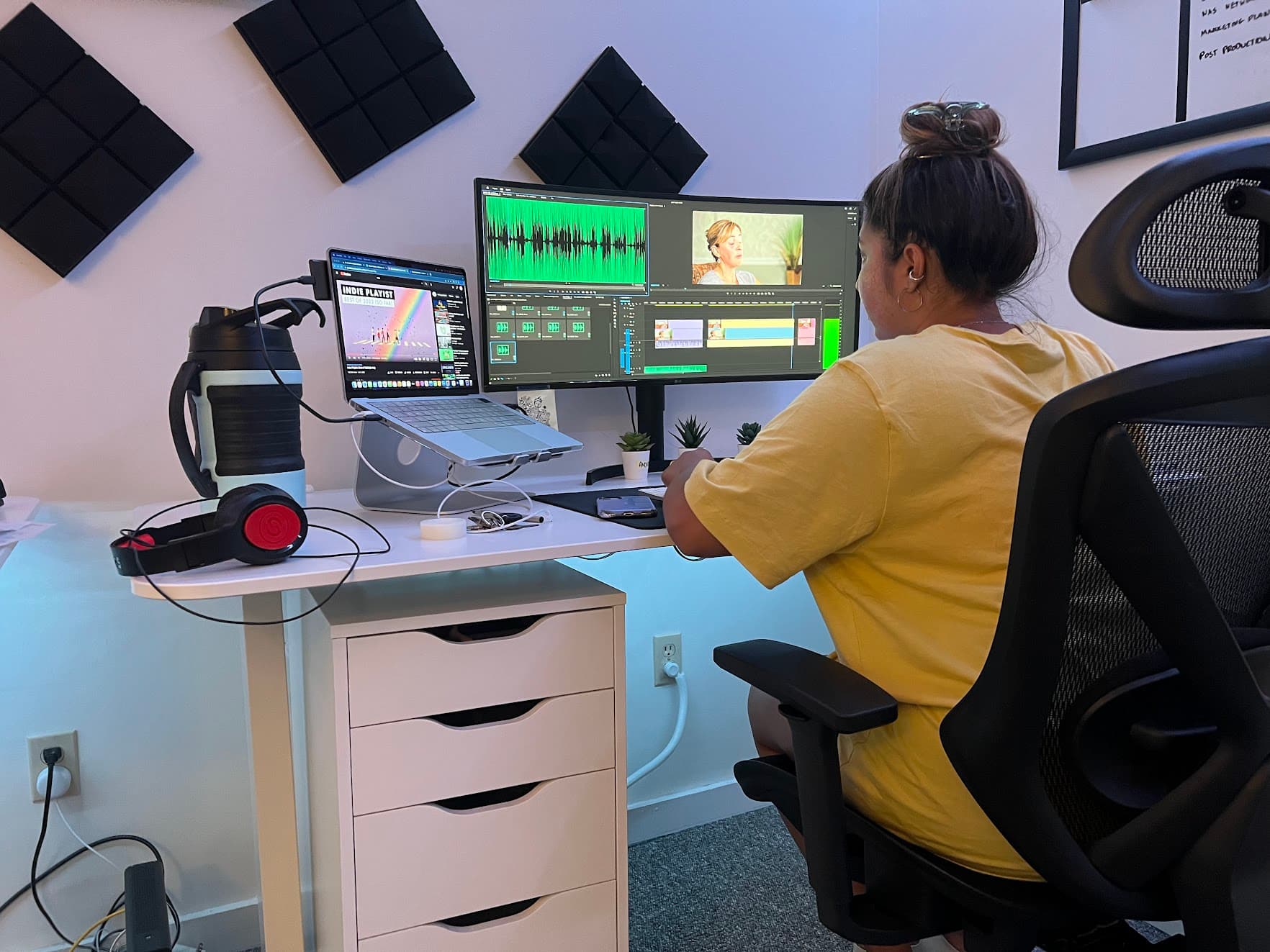
Back at the studio, everything moves into Adobe Premiere Pro, where the film is edited and color graded to preserve how the day actually felt. If you are curious how much that final step shapes a film, we wrote about it in Color Grading 101.
The cart, the cameras, the headsets: all of it exists so that when you press play, the equipment is the last thing you notice. The story is the first.
Curious what a production day looks like in person? We share behind-the-scenes on Instagram.